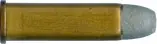
There were two “SPECIAL” handguns developed during the early part of the Twentieth Century. First there was the .38 Smith & Wesson, which D.B Wesson adapted with a higher load and lengthened case. That became the 38 S&W Special, one on the most popular handguns developed and still in production today. Then there was the 44 Russian, which was also adapted with a higher loading and lengthened case and became the 44 Special. Handgunners, being the creative lot that they are must have thought then that if there were a 38 Special and a 44 Special, why on earth not one that is midway between them? There were several experiments done during those early years, notably by Joplin MO gunsmith Cyril “Pop” Eimer who came up with the 40 EIMER COLT based on the 401 Winchester case. Colt at that time had the 41 Long Colt, and although Fred Moore, who was the Colt factory superintendent, did some experiments in 1932 when he chambered the Colt Official Police for the .41 Colt Special using 210-grain bullets at up to 1,150 fps. Remington even supplied the ammunition, and although they could have had a jump by three years on the S&W .357 Magnum, Colt declined to offer the .41 Colt Special. The 38 Special evolved further into the 357 Magnum as did the 44 Special to the 44 Magnum, courtesy of Elmer Keith.
Keith then went further and got S&W and Remington interested in the 41 Magnum, even though there was again at the time some development at Colt with their 400 Magnum during the later years. Remington however came to the market earlier and the whole 40 cal. Colt development died a quiet death. In the end it was probably for the greater good as the 41 Magnum and its “little brother”, the 41 Special never achieved the popularity of the 38 Special – 357 Magnum or the 44 Special – 44 Magnum cousins. The 357 Magnum shooters could download to .38 Special ballistics as could the 44 Magnum shooters and hunters to 44 Special. Not many law enforcement agencies adopted the 44 Magnum and the 41 Manum S&W Model 58 with 4” barrel had too much recoil for most law enforcement personnel.
This specimen was one of three different versions that Fred Moore experimented with during the early years and is known as the TYPE 3. (Erlmeier, Brandt Ref. 386)