
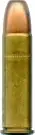
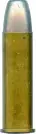
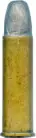
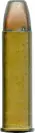
After the discovery of smokeless propellant in 1886, the Austro-Hungarian army needed to modernise their old black powder revolvers. It was also during the middle of the 1890’s that the idea of the semi-automatic pistol was born but during their early trials the Army realised that although the semi-auto was the way of the future, the future was maybe not 100% there yet. The revolver used by the Austro-Hungarians was the popular Gasser M1870, developed by Leopold Gasser, (1836 – 1871) and after his death the company passed to his brother Johann Gasser. During this same period, an entrepreneur by the name of August Rast was making a name for himself with his successful sewing machine and parts making company. He brought in a partner to expand his business, and the partner was Michael Gasser, brother of Leopold and Johann and the company Rast & Gasser was formed in 1884. During 1886 the company was contracted by the Austro-Hungarian Army to manufacture firearm parts and that placed them in a position to also focus on firearm design during the 1897 trials where they entered their August Rast designed 8mm Rast & Gasser which was an eight shot, gate loaded revolver competing against the newly designed semi-auto designs like the Salvator-Dormus, Mannlicher, Krnka and Schönberger designs.
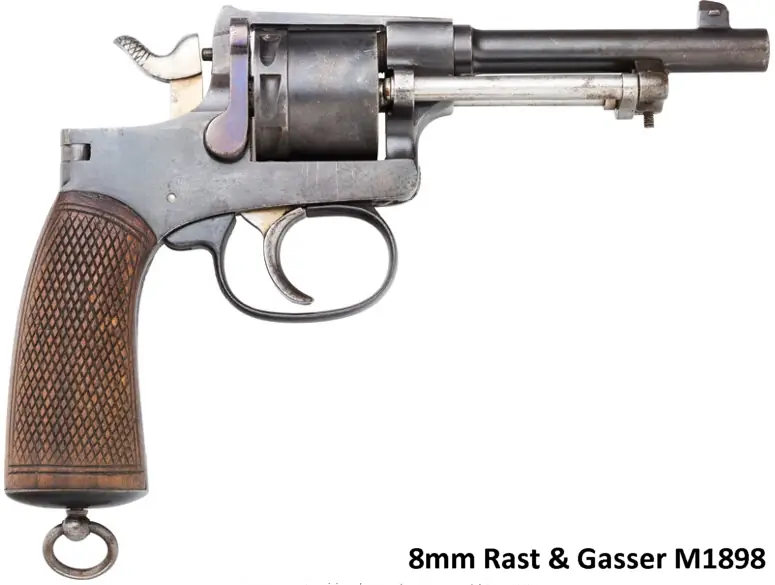
Looking at the criteria set by the military of readiness, the ability for follow-up shots and absolute reliability the Rast & Gasser revolver was officially adopted in 1899 above the semi-auto designs and first produced by the firm of Leopold Gasser, although production only started in 1901. By 1903 the company Leopold Gasser was dissolved because of legal issues stemming from the will of Johann Gasser, but all the tools and machinery for the manufacture of the M1898 was sold to the firm of Rast & Gasser, finally enabling August Rast to manufacture his own design in his own factory. The M1898 would be produced through the First World War up to around 1919 and was even used during WW2 in a limited capacity. (Erlmeier, Brandt Ref. 89).


