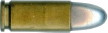
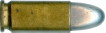
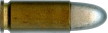
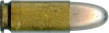
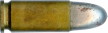
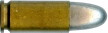
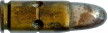
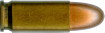
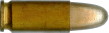
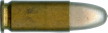
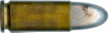
Whilst researching the 8mm M.7 Scharfe Pistolepatrone (a.k.a. 8mm Roth-Steyr), I got sidetracked for a while reading about the fascinating history and reasons for European rearmament during the period from 1860 leading up to World War 1. Historians tend to attribute various (not necessarily always the same) events during the few decades preceding 1914 that either singly or cumulatively lead Europe down the path to war. We can take a step back to the start of the industrial revolution. It is debatable but accepted by most historians, that during the First Industrial Revolution (1790 – 1850), giant strides were made in manufacturing technology, but that did not always equate to similar advancements in military technology. The second Industrial revolution from 1850 onward is considered the period where the greatest strides were made militarily. It were these military developments that culminated in three periods of mini arms races in Europe. The first was the period between 1866 – 1870 with the introduction of the breech-loading rifle and field artillery, with this period culminating in the Franco-Prussian War of 1870. The second period was between 1887 – 1893, which interestingly did not end up in war, but the military advances were very immense, such as the introduction of the small-bore repeating magazine rifle, smokeless powder, better explosives for artillery, machine guns and the rapid expansion of the European rail infrastructure to facilitate rapid troop movements within territories to name just a few. The third period was from 1910 – 1914 that eventually lead to all-out war. With all the military advances mentioned above, one area that lacked with most European military powers at the time was the development of the handgun. The development of the semi-auto pistol was still in its infancy in the mid-1890’s to the beginning of the 20th century, with all the military powers still using revolvers.

The Austro-Hungarian Empire adopted the Rast & Gasser revolver in 1898 as official side-arm, even though Czech engineer Karel Krnka (1858–1926) already had an 1895 patent for his semi-auto design. Employed by the Georg Roth factory, which did not have the facilities to manufacture firearms, his design was made by Sauer, as the 7.65mm Roth-Sauer. An improved design was entered for the 1905 Austrian military trials and succeeded as the first semi-auto pistol to be adopted by a major power. The Austrian Government purchased the manufacturing rights and moved production to the Steyr factory, with it being named the Repetierpistole Roth–Steyr M1907. (Erlmeier, Brandt Ref. 102).
Sources:
Stevenson, D. (2016) Land Armaments in Europe, 1866-1914. London School of Economics Research Online.
Brose, E. (2014) Arms Race prior to 1914, Armament Policy. International Encyclopaedia of the First World War.
Scarlata, P (2024) Austria-Hungary’s M.7 “Roth” 8mm Pistole: A Historical Look. Firearms News

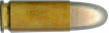

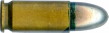

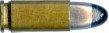

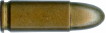
The specimen with black tip is the relatively rare PRESSURE TEST loading. See also Mötz Vol.1 p.206